

Is Graphic Design Dead in 2026? The question is no longer theoretical. When a $30 AI subscription can generate in one hour what once required a junior designer working full-time, the structure of the creative industry changes permanently.
Is Graphic Design Dead in 2026 — Or Just Evolving?
In 2022, if you wanted a decent logo, you hired a freelancer. In 2026, you open an AI image generator and produce hundreds of options instantly.
This is not a minor productivity upgrade. It is an economic restructuring.
The “pixel pusher” role — the entry-level designer who adjusted kerning, spacing, and alignment — is disappearing. Execution has been automated.
But automation does not eliminate creativity. It eliminates repetition.
The real shift is this:
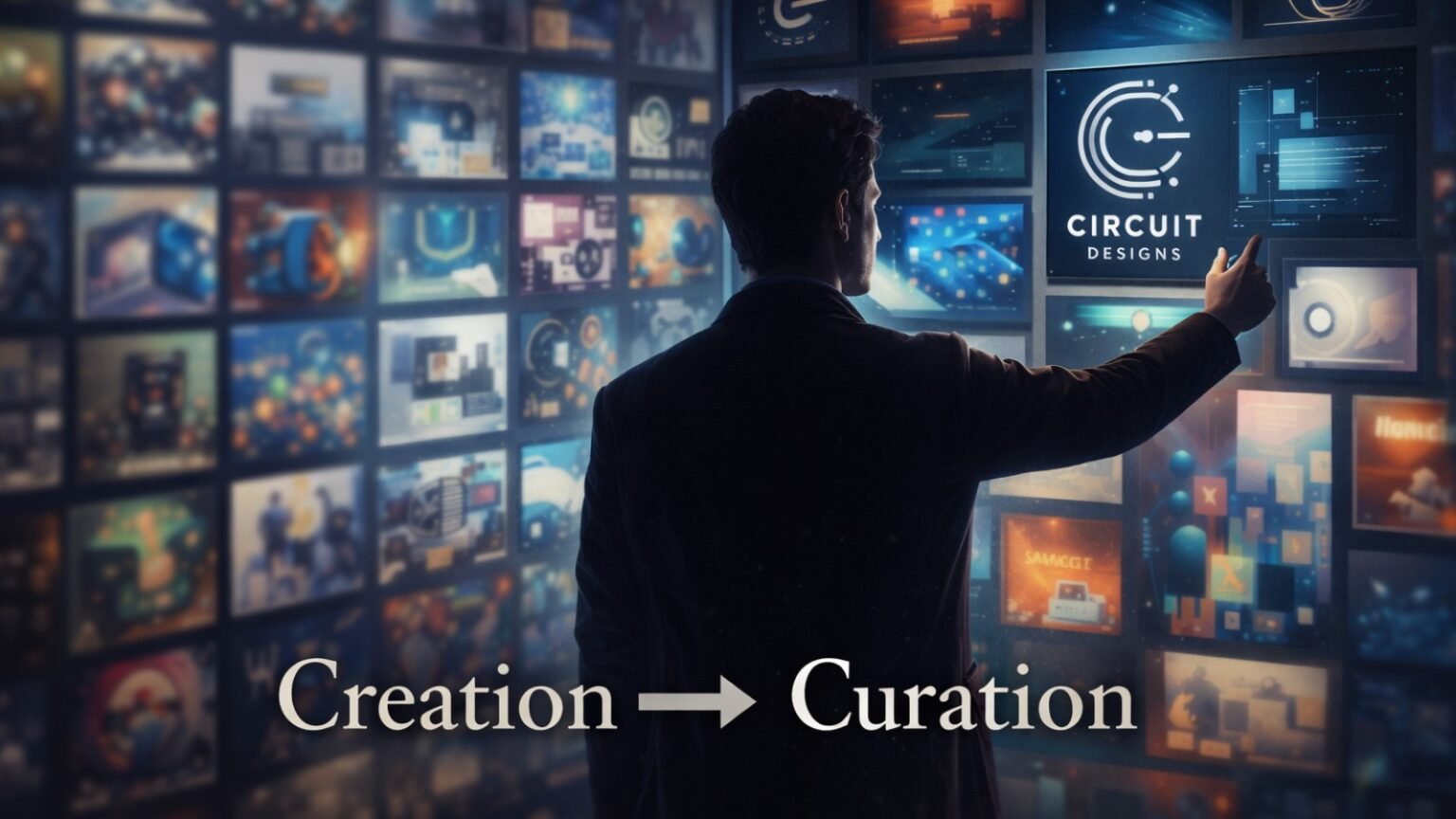
Design is moving from manual production to curated direction.
The Rise of the Creative Director Economy
Designers who survive the AI flood are not the fastest with software. They are the strongest with taste.
AI can produce infinite variations. It cannot:
- Understand cultural timing
- Predict emotional resonance
- Detect when something feels “off”
- Intentionally break a rule
This is why the most valuable designers in 2026 are functioning as Creative Directors — not operators.
They do not sell deliverables.
They sell judgment.
The market is shifting from:
“Can you make this?”
to
“Should we make this?”
That is a fundamentally different skill set.
The “AI Slop” Backlash
When average design becomes free, average design becomes worthless.
We are already seeing backlash:
- Brands deliberately using imperfect typography
- Hand-drawn packaging aesthetics
- Physical zines and screen printing returning
- Analog textures replacing digital polish
The cultural signal is clear:
Perfection now signals automation. Imperfection signals humanity.
This backlash mirrors the broader digital fatigue trend we explored in The End of Content: Why 2026 is the Year of Anti-Search.
The more synthetic the web becomes, the more audiences crave proof of human authorship.
Why This Signals a Structural Shift in the Creative Industry
The real transformation is not visual. It is economic.
AI has compressed the bottom layer of the creative pyramid.
Entry-level roles are shrinking. Mid-tier execution roles are shrinking.
But high-level strategic roles are expanding.
Creative work is becoming polarized:
Low-cost, high-volume automation
vs
High-value, high-context human direction
This mirrors patterns documented in broader future-of-work research, including workforce polarization trends outlined in the World Economic Forum’s Future of Jobs Report 2025.
The middle layer — competent but not distinctive — is where automation hits hardest.
Designers who relied on technical skill alone are vulnerable. Designers who develop narrative framing, brand strategy, and audience psychology are compounding.
Survival Guide: Compete on Story, Not Speed
If you are a designer in 2026, do not compete with AI on output.
You will lose.
Instead:
- Don’t sell a logo. Sell brand positioning.
- Don’t sell an image. Sell narrative cohesion.
- Don’t sell execution. Sell direction.
AI tools are inevitable. The only strategic advantage left is perspective.
The creative who understands cultural tension, generational mood, and emotional timing cannot be replaced by a generative model.
Strategic Implications for the Next 3 Years
If this shift continues, expect:
- Agencies restructuring around smaller core strategy teams
- Junior roles transforming into AI prompt operators
- Clients demanding faster turnaround with fewer revisions
- Designers building personal brands instead of portfolios
The question “Is Graphic Design Dead in 2026?” misunderstands the shift.
Design is not dying.
Execution is dying.
Authority is rising.
Conclusion
Is Graphic Design Dead in 2026? No.
But the industrial era of design is over.
The designer who survives the AI flood is not the one who produces the most assets. It is the one who understands the story behind the assets.
The job did not disappear.
It leveled up.
Why This Matters
Culture shifts before economics does.
When audiences start valuing authenticity, imperfection, and narrative coherence over polished automation, markets follow.
The creative industry is not collapsing — it is stratifying.
The question is not whether AI replaces designers.
The question is whether designers evolve fast enough to replace themselves before AI does.