

The Strait of Hormuz closure 2026 has effectively removed one of the world’s most critical maritime chokepoints from commercial use. Through 21 miles of water between Iran and Oman passes roughly 20% of global oil supply and substantial volumes of liquefied natural gas. Since March 2, when Iran’s Revolutionary Guard Corps formally declared the strait closed following US-Israeli airstrikes, tanker traffic has fallen to near zero. What began as an emergency has, within two weeks, acquired the character of a structural condition.
Table of Contents
The Anatomy of the Strait of Hormuz Closure 2026
This pattern of insurance-driven paralysis did not emerge in a vacuum. It reflects a longer repositioning around energy corridors that China’s infrastructure diplomacy had quietly accelerated well before March 2026.
The mechanism that shut the strait was not a military blockade in the traditional sense — no physical barrier prevents transit. What collapsed was the insurance architecture that makes commercial shipping possible.
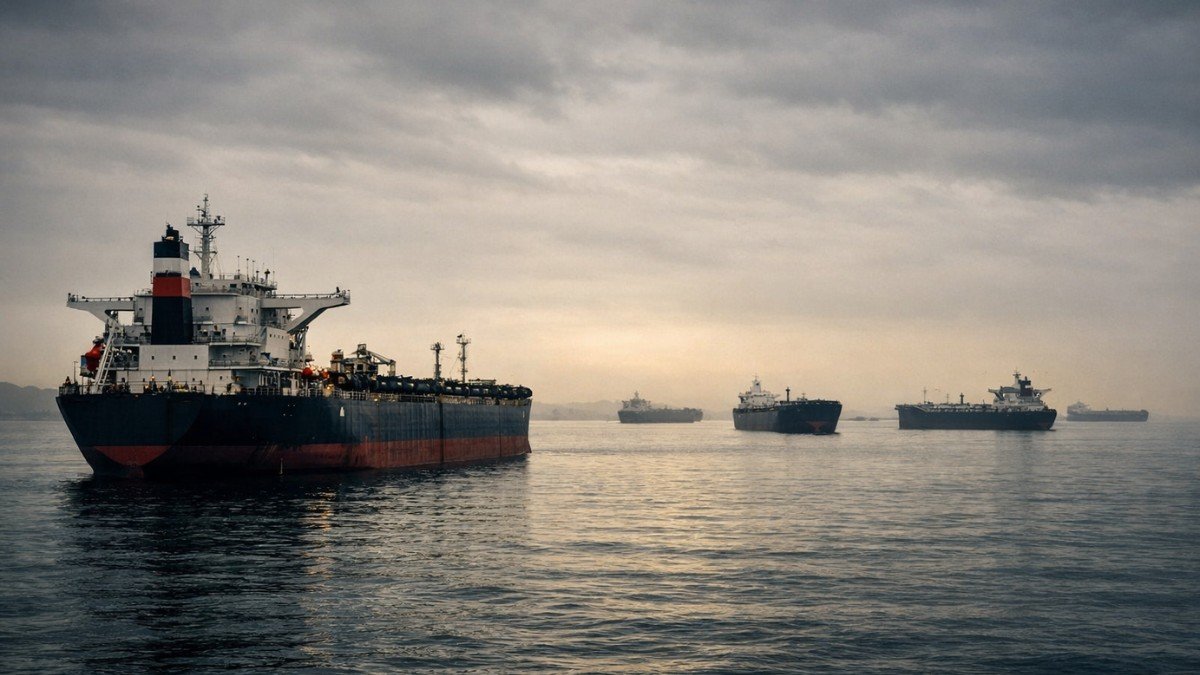
By March 5, protection and indemnity clubs — the mutual insurers covering third-party liabilities for roughly 90% of the global merchant fleet — had issued notices cancelling war risk extensions for vessels in the Gulf region. These are not optional: port authorities, charterers, banks, and regulators all require adequate cover as a condition of operation. Without P&I cover, ships cannot sail commercially. The effect was immediate. Major carriers including Maersk, CMA CGM, MSC, and Hapag-Lloyd suspended transits. By March 3, only four vessels crossed the strait — against a seven-day average of approximately 77 crossings. Hundreds of tankers remain stranded at anchorages on both sides.
War risk premiums, which had risen from 0.125% to 0.2–0.4% of ship value in the days before the strikes, surged to as high as 1% per voyage in the immediate aftermath — a fivefold increase that added hundreds of thousands of dollars in costs per shipment. For tankers where coverage remained theoretically available, the economics had already crossed the threshold of commercial viability.
The structural vulnerabilities in global energy supply chains were well-documented before March 2026 — but the speed of the insurance collapse caught most risk models unprepared.
Why the $20 Billion Plan Falls Short
On March 6, the US International Development Finance Corporation announced a $20 billion reinsurance facility, with Chubb confirmed as lead underwriter on March 11. The stated objective was to restore confidence among shipowners and restart oil flows through the strait. The market response has been cautious — and the independent credit assessments have been blunter.
Moody’s Ratings identified the fundamental gap: the DFC facility covers hull and machinery and cargo, but not P&I liability risk. Liability cover — the insurance that protects against third-party claims arising from collisions, pollution, and crew liability — is precisely what the P&I clubs withdrew. Without it, most shipowners face unacceptable legal and financial exposure regardless of whether hull and cargo insurance is available. Morningstar DBRS reached a similar conclusion, noting that naval escort capacity is likely to be limited relative to the normal volume of shipping — dozens of large tankers per day — creating a bottleneck that slows any recovery even if convoy arrangements are introduced.
There is a further structural complication. The DFC facility applies to vessels with US connections. Many of the tankers currently stranded in the Gulf have no such connection. The plan, as currently structured, addresses a subset of the problem while leaving the majority of stranded tonnage without a path to transit.
Shipping companies have been explicit about the sequencing issue. Until there is clear stability and confidence that ships can transit without being targeted, insurance coverage alone is insufficient. Chubb’s own CEO noted the facility was “a positive signal” — not a solution. Morningstar DBRS and Moody’s independent assessments confirm the liability gap remains unresolved.
The Systemic Impact
The Strait of Hormuz closure 2026 is already producing measurable effects across multiple dimensions. Brent crude has risen above $91 per barrel. Japan — which sources approximately 70% of its Middle Eastern oil through the Hormuz corridor — has requested government release of strategic stockpiles. Pakistan formally requested Saudi Arabia reroute oil supplies through Yanbu on March 4. Saudi Arabia has activated its East-West pipeline to redirect some crude exports, though capacity is limited.
The rerouting of traffic around Africa’s Cape of Good Hope adds 10 to 14 days to Asia-Europe energy supply chains — a permanent cost increase that affects freight rates, inventory capital requirements, and just-in-time supply chains simultaneously. Container equipment is piling up in the Gulf, reducing global container availability across all trade lanes. The knock-on effects will persist for weeks after any resolution.
Who is most exposed: Japan, South Korea, and India — the three largest Asian importers of Middle Eastern crude — face the sharpest near-term supply pressure. European LNG importers are monitoring Qatar’s export capacity. The shipping industry faces a prolonged period of elevated war risk premiums and route uncertainty.
Who benefits: US domestic oil producers gain a price premium. Non-Gulf crude exporters in West Africa and the North Sea are seeing increased demand. Cape of Good Hope port facilities are absorbing diverted cargo under growing congestion pressure.
What Changes Next for the Strait of Hormuz Closure 2026
The full consequences of the Strait of Hormuz closure 2026 will unfold across a structural timeline — not just an operational one. The question is not whether the strait will eventually reopen — it is what conditions will be required to restart the insurance architecture, and how long that takes.
For the strait to become commercially viable again, three conditions must align: meaningful reduction in attack risk, restoration of P&I liability cover by the major clubs, and a credible escort or protection mechanism that extends to non-US-flagged vessels. None of these conditions are currently met. The interplay between them creates a sequencing problem the DFC facility alone cannot solve.
Policy responses in the coming 30 days will likely focus on expanding the DFC facility to cover P&I liability, accelerating multinational naval coordination, and diplomatic channels with Iranian interlocutors willing to facilitate partial openings for neutral-flagged vessels — as occurred with Turkish and Indian ships in mid-March.
The chokepoint dynamic here is not separable from the wider contest over critical supply dependencies. The US-China competition over compute and resource leverage runs on the same logic — physical and technological chokepoints are now treated as equivalent strategic instruments.
Conclusion
The Strait of Hormuz closure 2026 is a test of whether the global insurance and logistics infrastructure can adapt to a prolonged, institutionalised maritime disruption — not merely respond to a temporary emergency. The US government’s $20 billion reinsurance plan is a structural intervention that addresses the wrong layer of the problem. Until P&I liability cover is restored and attack risk meaningfully reduced, tanker owners have no commercial pathway through the strait, regardless of hull and cargo insurance availability.
Why This Matters (The Bigger Picture)
The Hormuz closure is being treated in much public commentary as a crisis that will resolve when the Iran conflict ends. The deeper structural reading is different. Global energy logistics pricing models, shipping insurance frameworks, and just-in-time supply chains were designed for a world in which the Hormuz corridor was a reliable constant. That assumption is now structurally broken.
Even a partial reopening will leave a permanent risk premium embedded in energy logistics costs — a second-order effect that will reshape energy pricing, supply chain architecture, and geopolitical leverage for years. The actors who move fastest to build alternative routing capacity, strategic stockpiles, and insurance frameworks for high-risk corridors will define the next decade of energy infrastructure.