

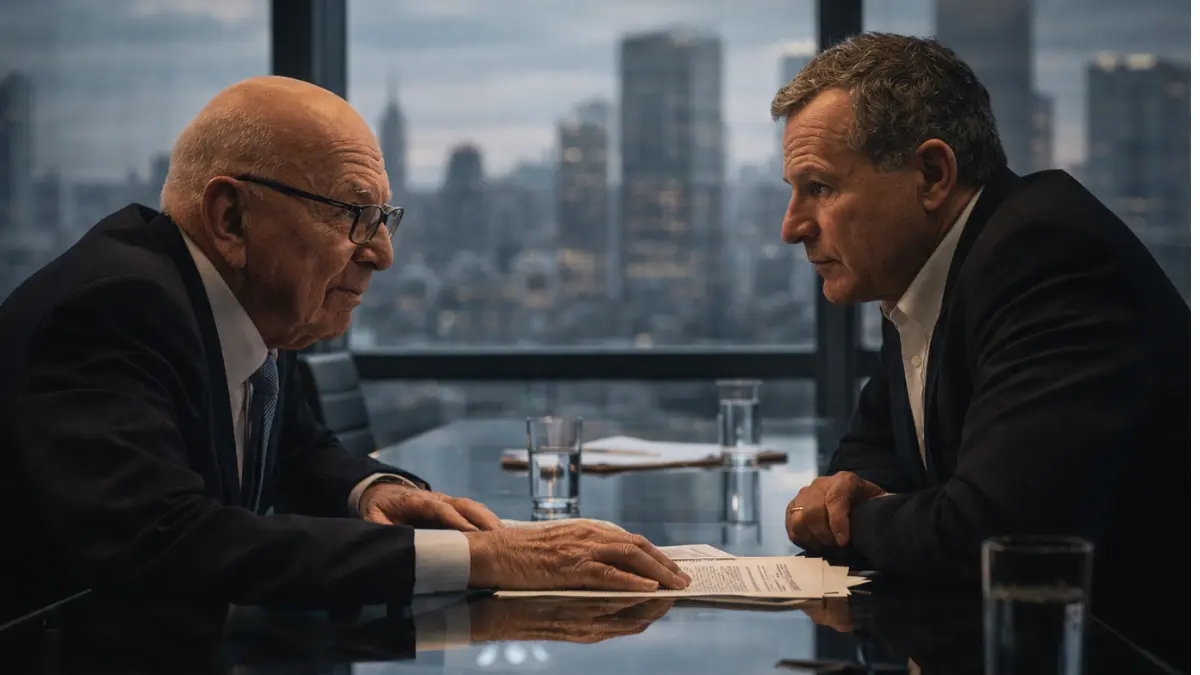

The streaming consolidation battle now gripping Hollywood is not merely a corporate transaction. It is a structural reckoning with a decade-long bet that fragmentation — more platforms, more content, more choice — was the natural direction of media. It was not. The fight between Netflix and Paramount Skydance for control of Warner Bros. Discovery, now valued at $111 billion in Paramount’s hostile counter-offer, represents the system correcting itself with the force of accumulated financial pressure.
How Streaming Consolidation Reached Breaking Point
When Netflix proved that subscription streaming could replace cable, the industry responded by building dozens of rivals. Disney+, HBO Max, Peacock, Paramount+, Apple TV+, Discovery+ — every major studio, network, and technology company launched a platform between 2019 and 2022. The logic was coherent on the surface: own the subscriber relationship, control distribution, capture the data, cut out the middleman. By 2024, households in developed markets were managing an average of four to six paid streaming subscriptions simultaneously. Subscription overload became the industry’s self-inflicted wound.
The correction was inevitable. What accelerated it was a fundamental repricing of what investors value. The subscriber growth era — in which Netflix surpassed 300 million global subscribers and rivals raced to match its scale — has given way to an efficiency era. Platforms are no longer valued on subscriber numbers alone. Investors now demand operating margin, average revenue per user, and churn control. That shift structurally undermines every mid-tier platform that reached scale on promotional pricing without the content library to justify retention at full price.
Warner Bros. Discovery entered 2026 carrying the debt architecture of its own consolidation attempt — the 2022 merger of WarnerMedia and Discovery. Its portfolio spans HBO, DC, the Warner Bros. film studio, CNN, and Discovery’s non-fiction catalogue. In theory, one of the most comprehensive content libraries ever assembled under one corporate roof. In practice, a structural mismatch: a premium scripted brand sharing a balance sheet with reality television networks under constant cost pressure.
The Architecture of the Deal — and Why It Threatens Everyone
Netflix’s initial $82.7 billion offer for WBD’s streaming and studio assets reflected what the platform actually values. Not CNN. Not linear cable. The Batman franchise. The White Lotus. The institutional creative output of thirty years of HBO commissioning culture. At 300 million global subscribers, Netflix’s distribution infrastructure can monetise a deep library at a scale no other platform can replicate.
Paramount Skydance’s hostile counter-bid — $111 billion for the entirety of WBD including its linear networks — is a different strategic calculation. It is not an attempt to build a streaming giant. It is an attempt to prevent Netflix from becoming one. A merged Netflix-WBD would control a content library and subscriber base large enough to price, negotiate, and distribute with near-monopoly leverage across the global market. Paramount’s inclusion of CNN adds a public interest dimension that complicates regulatory clearance but signals how seriously the incumbent studio system takes the competitive threat.
The underlying dynamics of platform trust are already fragmenting — consolidation narrows the number of entities audiences can migrate to, concentrating both viewing behaviour and cultural dependency within fewer institutional gatekeepers.
The Systemic Impact — Who Loses When Scale Wins
The consequences reach well beyond the two bidders. For mid-tier streaming platforms — Apple TV+, Peacock, standalone Paramount+ — a consolidated Netflix-WBD or a merged Paramount-WBD creates a two-tier market in which global scale becomes the only viable survival strategy. Platforms that cannot demonstrate 100 million-plus subscribers become either acquisition targets or niche operators with permanently constrained leverage over content creators, advertisers, and distributors.
For subscribers, consolidation delivers a familiar paradox: apparent simplification masking structural price increases. Fewer platforms means fewer competing bids for the same content library, reduced promotional pricing, and leverage that shifts decisively from consumer to platform. According to AlixPartners’ 2026 Media and Entertainment Industry Predictions Report, the top five streaming platforms already generate nearly two-thirds of global OTT subscription revenues. A successful consolidation concentrates that further — and concentrated media markets extract that advantage through pricing over time, not immediately.
For European broadcasters — ITV, Canal+, public service networks across Germany and Scandinavia — the pressure is existential. Former ITV chair Peter Bazalgette stated publicly that not all European broadcasters can have a long-term future against scaled streaming giants. The EU’s Digital Services Act enforcement adds regulatory friction to the American platforms’ expansion, but it cannot alter the underlying economics of content library depth and subscriber concentration.
Creator networks are already functioning as an alternative distribution infrastructure, partly in response to this narrowing of the mainstream platform layer — a structural hedge against consolidation that is accelerating in parallel with the M&A activity.
What Changes Next
The most consequential near-term variable is not which bid WBD shareholders accept. It is what antitrust authorities in the US, EU, and UK determine about allowable market concentration in digital media. The DOJ, EU Commission, and CMA have each demonstrated willingness to intervene in large media mergers. Paramount’s inclusion of CNN — a news organisation with demonstrated public interest obligations — introduces a threshold that pure streaming consolidation deals do not carry, and may prove the deciding variable in regulatory review timelines.
If Netflix completes the acquisition, it effectively ends the studio-as-independent-entity model for WBD’s assets. Studios become content production subsidiaries of distribution platforms rather than autonomous creative institutions. The implications for commissioning priorities, creative risk tolerance, and the cultural diversity of output are structural and long-cycle — changes that take years to become fully visible in what audiences actually see on screen.
If Paramount wins, it must manage WBD’s existing debt load while operating two competing streaming platforms across overlapping subscriber bases. The operational complexity alone is likely to trigger further asset disposals — potentially breaking up what the 2022 merger assembled at considerable cost. Either outcome reshapes the global content supply chain for the next decade.
Conclusion
The $111 billion valuation being placed on Warner Bros. Discovery is not really a number about content. It is a price being placed on market architecture — on who controls the dominant content distribution layer in a post-fragmentation media world. The fact that two separate bidders are willing to pay it tells you everything about how consequential that control is considered to be.
Why This Matters (The Bigger Picture)
Streaming consolidation resolves a question the industry has avoided for a decade: how many platforms can the global attention economy actually sustain? The answer, it now appears, is fewer than anyone built. The studios, networks, and technology companies that rushed into direct-to-consumer streaming assumed content was the moat. What this $111 billion battle demonstrates is that distribution scale — at sufficient size, with sufficient library depth — is the moat. The companies that own both will determine not just what gets watched, but what gets made. That is not merely a market outcome. It is a cultural one with consequences that will compound across every creative industry connected to Hollywood’s institutional infrastructure.