

The Section 122 tariffs now governing all US imports are not a durable trade policy. They are a constitutionally narrow stopgap — legally contested, time-limited to 150 days, and scheduled to expire on July 24, 2026, unless Congress takes affirmative action. Understanding what this mechanism can and cannot legally achieve, and what follows its expiration, is now a structural requirement for any enterprise, institution, or government with cross-border exposure to the US economy.
What the Supreme Court Actually Ruled
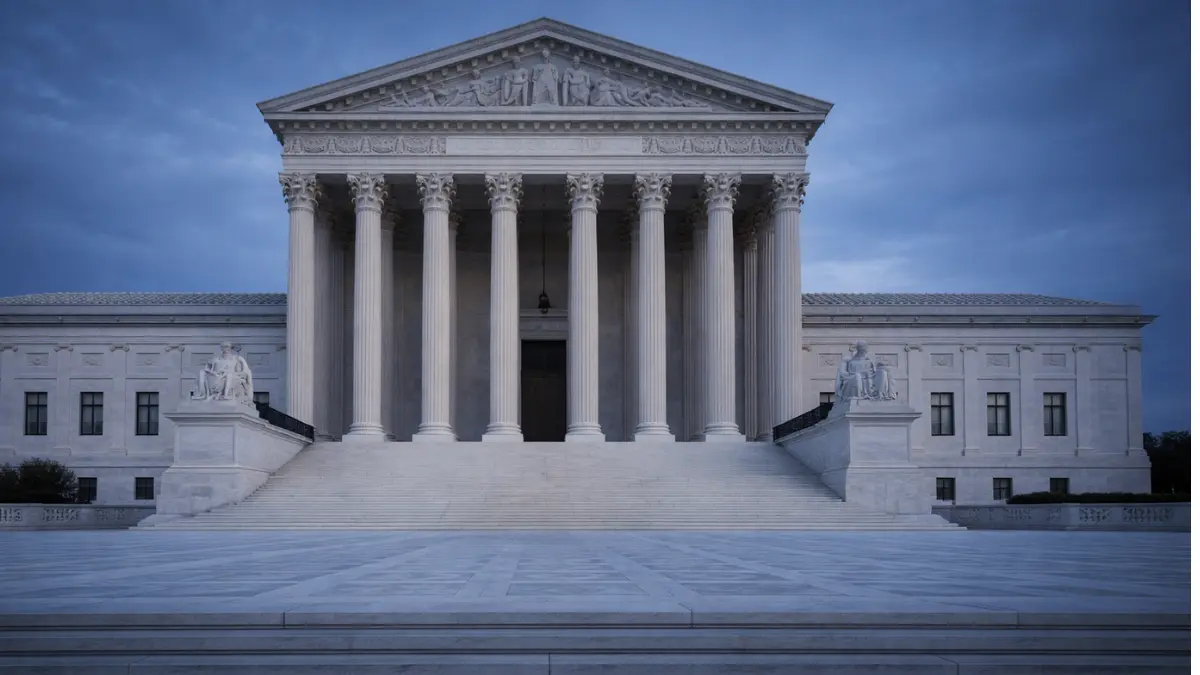
On February 20, 2026, the Supreme Court issued its decision in Learning Resources, Inc. v. Trump by a 6-3 majority. The Court held that the International Emergency Economic Powers Act does not authorise the president to impose tariffs. The reasoning was grounded in constitutional principle: the power to tax, including through tariffs, belongs explicitly to Congress under Article I, Section 8. Any presidential imposition of tariffs depends on a clear congressional delegation of that authority, and IEEPA’s operative language — granting the president power to “regulate importation” during a declared national emergency — was found insufficient to constitute one.
The ruling invalidated the administration’s sweeping reciprocal tariffs, the fentanyl-related duties on China, Canada, and Mexico, and the broader tariff architecture assembled since 2025. What it did not eliminate was the tariff system. It eliminated one legal instrument. Within hours of the decision being published, the administration invoked another.
The Section 122 Tariffs: Mechanics, Limits, and Legal Exposure
Section 122 of the Trade Act of 1974 authorises a temporary import surcharge when the United States faces “large and serious balance-of-payments deficits” — a specific statutory condition that economists and legal analysts have immediately questioned as inapplicable to the current situation. The US faces trade and current account deficits rather than the broader balance-of-payments crisis the statute was designed to address. That distinction forms the basis of challenges already filed in the Court of International Trade, including a multistate lawsuit arguing that the statutory prerequisites have not been met.
The Section 122 tariffs took effect February 24, 2026, initially at 10% and subsequently raised to 15% — the statutory maximum. They apply broadly across imports from all countries, with exemptions covering energy products, critical minerals, pharmaceuticals, certain aerospace goods, and selected agricultural categories. Critically, Section 122 tariffs stack on top of existing Section 232 and Section 301 duties rather than replacing them, limiting their net impact in already heavily tariffed sectors while sustaining cost pressure across others.
The structural constraint is unambiguous: 150 days. They expire on July 24, 2026, unless Congress votes to extend them. This is not a deadline the executive branch can manage unilaterally.
The supply chain disruptions that reshaped global logistics in early 2026 demonstrated that enterprises absorbing compounding cost shocks face asymmetric pressure when policy frameworks shift abruptly. The current tariff environment presents a structurally similar test.
The July 24 Cliff: What Businesses and Congress Face
For enterprises with import exposure, the immediate operational reality is layered uncertainty. Companies that paid IEEPA tariffs cannot recover payments through the Court’s ruling alone — CBP awaits executive guidance on the refund mechanism, and hundreds of lawsuits are queued before the Court of International Trade with no coordinated resolution timeline. Affected sectors vary significantly: apparel and leather goods face meaningfully lower effective rates under the Section 122 tariffs compared to IEEPA levels, while automobiles and fabricated metals see only modest reductions due to residual Section 232 exposure.
The structural pressure sits with Congress. An extension of Section 122 beyond July 24 requires an affirmative vote — and Senate Democrats retain the procedural capacity to filibuster it. Several Senate Republicans have demonstrated willingness to curtail tariff authority when constituent cost visibility is high. This vote arrives in the narrow political window before the 2026 midterm elections, where fiscal blame for consumer price levels will be a live electoral argument. Administrations rarely find the mathematics of pre-election tariff extension accommodating.
Treasury has signalled intent to maintain equivalent tariff revenue through Sections 232 and 301 investigations regardless of Section 122’s fate. But rebuilding a comparable tariff structure through these instruments takes months, and each carries its own legal constraints and investigative requirements.
What Comes Next: Section 301, USMCA, and the Architecture Rebuild
The administration is pursuing multiple legal channels simultaneously. The US Trade Representative has launched Section 301(b) investigations into 15 major trading partners plus the EU for excess manufacturing capacity, and into 60 countries for alleged failures to address forced labour — investigations that, if completed, authorise targeted tariffs without Section 122’s time limits or caps.
Section 232 remains the most legally durable instrument available. Existing duties on steel and aluminium are unaffected by the IEEPA ruling. Pending Section 232 investigations into semiconductor components create further pathways for sustained industrial policy objectives. These investigations and the structural US-China technology and trade competition driving them will define the next tariff phase regardless of what happens on July 24.
Layered across this is the July 1 USMCA joint review — a parallel structural deadline arriving just 23 days after Section 122 expiration, already affecting capital investment decisions in automotive, agricultural, and manufacturing supply chains across North America. As Brookings analysts have outlined, a Section 232 and 301-anchored tariff system will carry materially different distributional consequences across sectors than the broad IEEPA framework it replaced.
Why This Matters (The Bigger Picture)
The February ruling is not a trade policy adjustment. It is a constitutional repositioning — the first meaningful reassertion of congressional tariff authority in the modern era of expansive executive trade power. For the first time since the 1970s, the institutional architecture of US trade policy is structurally required to pass through a legislative process rather than an executive one.
Section 122 tariffs are a holding position, not a strategy. When the 150-day window closes on July 24, Congress will face a decision it has systematically deferred: own the tariff system explicitly, in the full visibility of an election year, or allow trade policy to fragment across the narrower, slower instruments of Sections 232 and 301. For enterprises, capital allocators, and trading partners, the structural variable is no longer the tariff rate. It is whether the institution constitutionally authorised to set those rates is prepared to do so.